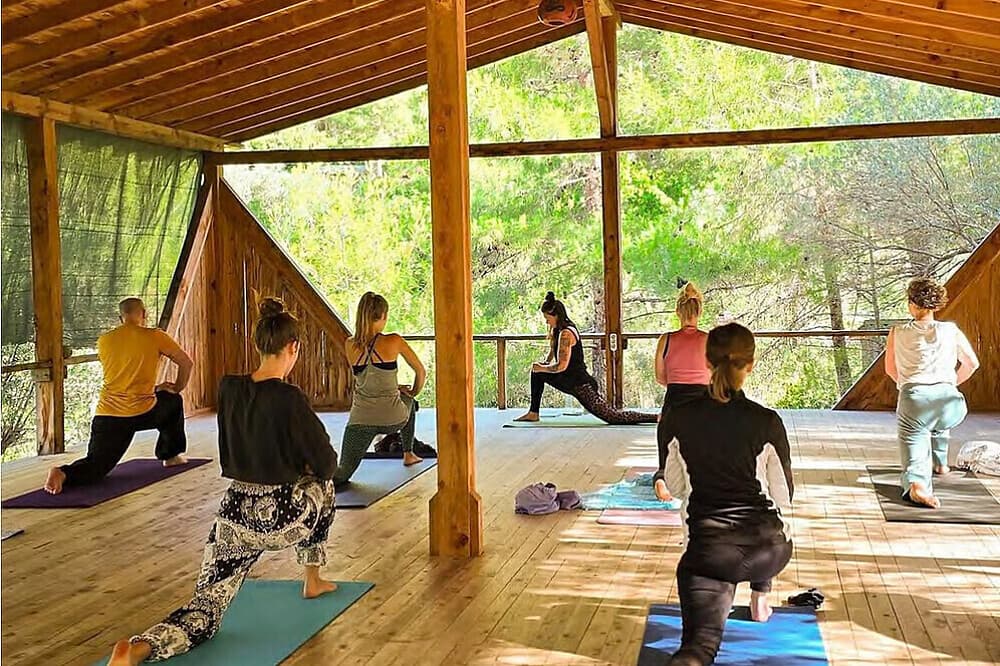
Step 1: Define Your Intention
Before you look at a single retreat listing, answer one question: what do you actually need right now? Not what you think you should need, or what sounds impressive on a booking confirmation — but what your nervous system, body, and life are genuinely calling for. Common retreat intentions include: rest and recovery (choose Yin, Restorative, or slow wellness programs with minimal schedule density), physical challenge and skill development (choose Ashtanga intensives or teacher training–adjacent programs), emotional processing (choose programs with somatic work, journaling integration, or therapeutic facilitation), community and connection (choose programs with communal meals, group activities, and social architecture), or spiritual deepening (choose programs with pranayama, meditation, and ceremony). Your intention will filter out roughly 80% of available retreats immediately — this is valuable.
Step 2: Match the Yoga Style to Your Level
Every retreat listing specifies a yoga style and a suitable level. Take these seriously. Ashtanga and Power Yoga programs require at least intermediate experience — attempting an Ashtanga intensive as a beginner leads to injury, frustration, and wasted investment. Hatha, Slow Flow, Yin, and Restorative programs welcome all levels genuinely. If you're unsure of your level: beginner = less than one year of regular practice; intermediate = 1–3 years of consistent practice; advanced = 3+ years with teacher-led study. When in doubt, book down: a program that challenges you moderately is more sustainable than one that overwhelms you. Good teachers always offer modifications — but they can't redesign a program mid-week for a mismatched guest.
Step 3: Choose the Right Location
Location affects experience more than most guests anticipate. Ask yourself: do I need water (sea, lake, river) to feel restored? Do I need dramatic landscape (mountains, canyons, open horizon)? Do I need cultural richness (history, architecture, markets)? Do I need quiet isolation, or comfortable infrastructure? Turkey's retreat regions each deliver a distinct environmental quality: Bodrum = Aegean luxury and community; Fethiye = active coastal lifestyle; Cappadocia = silence, depth, and spiritual landscape; Antalya = resort-standard infrastructure with Mediterranean warmth. Match the environment to your intention — a deeply introspective retreat is enhanced by Cappadocia's landscape; a social, active retreat comes alive in Fethiye.
Step 4: Assess Teacher Credentials and Lineage
Teacher quality is the single most important variable in retreat quality — more than accommodation, price, or location. Assess a teacher using: registered training (a 200-hour certification from a Yoga Alliance accredited school is the baseline; 500-hour or specialist certifications indicate deeper investment), lineage clarity (teachers trained in a named lineage — Ashtanga, Iyengar, Sivananda — carry transferable standards), years of retreat-leading experience (3+ years is the baseline; 7+ years indicates someone who understands the arc of a retreat container), and CPD engagement (ongoing training in anatomy, trauma-informed practices, or therapeutic applications indicates a teacher committed to professional development).
Step 5: Read Reviews Carefully
Retreat reviews are unusually information-dense when read correctly. Useful signals: consistency (the same phrases — 'felt completely held', 'teacher was exceptional', 'food was extraordinary' — appearing across multiple independent reviews are reliable indicators), specificity (reviews that describe a particular moment, meal, or conversation are more credible than vague praise), recency (reviews from the current or previous season are most relevant — retreat quality can change when teachers or venues change), and volume (10+ reviews provide meaningful signal; 3–4 reviews are insufficient for high-investment decisions). Red flags in reviews: multiple mentions of poor communication, cancelled sessions, misrepresented facilities, or 'not as advertised'.
Red Flags to Avoid
Be cautious of retreats that: cannot name the lead teacher or describe their training background; show no verifiable reviews from independent platforms; use exclusively stock photography in their listing imagery (suggests the property may not be as shown); offer very large groups (30+ guests) at premium prices; have no clear cancellation policy or require full payment with no refund clause; claim extraordinary results ('guaranteed transformation', 'complete healing') in their marketing language; or have no working direct contact (phone or email) for pre-booking questions. The retreat market, like any wellness market, contains operators more interested in the booking than the experience — these signals help you identify them.